

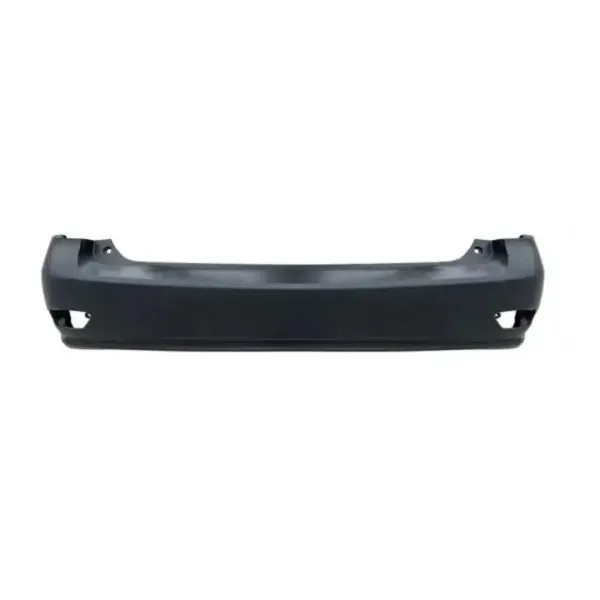
A replacement bumper is a vehicle-specific body component that must match the vehicle’s fitment, exterior design and related mounting or safety components. A sourcing specification should therefore cover vehicle identity, bumper configuration, mounting geometry, sensor provisions, material, surface finish and inspection criteria. Model name and model year alone are rarely enough for a reliable match.
1. Build an exact vehicle fitment record
Vehicle models may have different bumper designs across production years, facelift versions, trim levels and destination markets. Even when two bumpers look similar, their mounting points, grille openings and accessory positions may differ.
Start the RFQ with a structured vehicle record:
- Make, model and generation
- Production year and facelift version
- Body style and trim level
- Destination market or vehicle specification
- Front or rear bumper
- OEM part number, when available
- VIN or chassis code where appropriate
- Photos of the original bumper, mounting areas and related accessories
An OEM part number is one of the most useful references for identifying a replacement. If it is unavailable, provide the VIN and clear photos so the supplier can help verify the application.
Do not rely on the vehicle model name or front-view appearance alone. A bumper designed for a different trim or production version may have incompatible mounting tabs, grille openings or lower trim positions.
2. Identify the correct bumper configuration
The word “bumper” can refer to different parts of the vehicle’s front or rear bumper system. Before requesting a quotation, clarify whether you need an exterior bumper cover, a bumper assembly or a specific related component.
| Component | What Buyers Should Confirm |
|---|---|
| Bumper Cover / Fascia | Exterior shape, dimensions, surface finish and mounting tabs |
| Bumper Reinforcement | Application, structural specification and compatibility |
| Energy Absorber | Correct vehicle application and component configuration |
| Mounting Brackets | Position, shape and fastening points |
| Lower Grille / Bumper Mesh | Opening pattern, dimensions and trim version |
| Tow Hook Cover | Position, shape and compatibility with the bumper |
| Sensor Holders | Number, diameter and mounting position of sensor openings |
A bumper cover is not the same as a complete bumper assembly. Depending on the vehicle and supplier, a replacement may include only the exterior cover or may be supplied with selected grilles, brackets and accessories.
The bumper cover should also not be treated as a substitute for structural components such as reinforcement beams or energy absorbers. If these parts are damaged in a collision, they should be inspected and replaced according to the vehicle manufacturer’s repair procedures.
3. Check sensor openings and functional features
Modern bumpers often accommodate several vehicle features beyond exterior styling. These may include parking distance control (PDC) sensors, cameras, fog lights, lower grilles, tow hook covers and other accessories.
The position and design of these openings must match the original vehicle configuration.
| Feature | Details to Verify | Common Sourcing Risk |
|---|---|---|
| Parking Sensors | Number, diameter and position of openings | Sensor cannot be installed correctly |
| Camera Mount | Location and mounting design | Camera position or viewing angle differs |
| Fog Light Openings | Shape and position | Incorrect trim or lighting fitment |
| Lower Grille | Mesh pattern and dimensions | Different appearance or incompatible mounting |
| Tow Hook Cover | Position and shape | Missing or incorrectly fitted cover |
| Front Lip / Lower Trim | Design and mounting points | Trim does not align with the bumper |
Some vehicles have different bumper versions depending on whether parking sensors, fog lights or cameras are equipped. Confirm these details before approving a sample.
For vehicles with advanced driver assistance systems (ADAS), bumper replacement may also require inspection or calibration of affected sensors. Follow the vehicle manufacturer’s repair procedures and use qualified technicians where necessary.
4. Compare bumper materials and surface finishes
Replacement bumper covers are commonly made from automotive plastics, with polypropylene (PP) and related plastic materials used in many vehicle applications. However, the correct material should be determined by the original vehicle specification and the replacement product’s design.
When comparing products, buyers should consider more than the material name.
- Material specification: Confirm the stated material and whether it matches the intended application.
- Dimensional accuracy: Check the overall shape, edges and mounting positions.
- Surface quality: Look for visible scratches, deformation, uneven texture or other defects.
- Mounting strength: Inspect tabs, clips and fastening areas for damage or inconsistent workmanship.
- Finish condition: Confirm whether the bumper is supplied unprimed, primed or painted.
Many replacement bumper covers are supplied with a primer-ready surface and require professional painting before installation. A primed bumper is not necessarily a finished, vehicle-color-matched product.
For pre-painted orders, provide the vehicle paint code and confirm the expected color and finish with the supplier. Color variation can occur between different production batches and vehicle paint conditions, so sample confirmation is advisable.
5. Verify mounting points and installation compatibility
A bumper can have the correct overall appearance but still be unsuitable for installation if its mounting geometry differs from the original part.
Before approving a replacement, compare the following details:
| Inspection Area | What to Check |
|---|---|
| Mounting Tabs | Number, position, shape and condition |
| Side Retainers | Alignment with the vehicle’s fender area |
| Upper Mounting Edge | Fit with the hood, radiator support or related body panels |
| Lower Mounting Points | Compatibility with underbody covers and splash shields |
| Grille Openings | Shape and alignment with the required grille |
| Panel Gaps | Consistency with adjacent body panels after fitting |
Where possible, use the original part number and vehicle-specific references to verify compatibility. For a new application or uncertain fitment, a physical sample or test fitting can provide additional confirmation.
Do not assume that installation will be correct simply because the bumper can be attached to the vehicle. Panel alignment, accessory fitment and mounting security should also be checked.
6. Inspect a fitment sample before bulk ordering
For importers and distributors, sample inspection helps identify product differences before a larger shipment is arranged. A useful inspection should cover both the bumper’s physical condition and its compatibility with the target vehicle.
| Inspection Area | What to Verify |
|---|---|
| Product Identification | OEM reference, vehicle model, year and front/rear position |
| Overall Shape | Contour, dimensions and symmetry |
| Mounting Points | Tabs, clips, brackets and fastening positions |
| Accessory Openings | Sensors, cameras, fog lights and grille positions |
| Surface Quality | Scratches, cracks, deformation and finish consistency |
| Test Fitting | Alignment with adjacent panels and related accessories |
| Product Configuration | Included grilles, covers, brackets and other components |
| Batch Consistency | Appearance and key dimensions across samples |
For larger orders, buyers can also request product photos, dimensional information and inspection records where available. Any approved sample should be used as a reference for the agreed product configuration and quality expectations.
7. Confirm packaging and shipping requirements
Bumper covers are relatively large body parts, and their shape makes them vulnerable to scratches, pressure deformation and damage to mounting tabs during transportation.
Before ordering, clarify:
- Individual protective wrapping and surface protection
- Internal support to reduce movement and deformation
- Protection for mounting tabs, corners and protruding sections
- Carton or pallet arrangement suitable for the bumper dimensions
- Outer carton labels and product identification
- Quantity per carton and shipping configuration
For wholesale shipments, packaging should be agreed according to the product size, order quantity and transportation route. Buyers should also confirm how damaged products or packaging issues will be documented and handled.
8. Prepare a complete bumper RFQ package
A complete request for quotation helps suppliers identify the correct product and reduces repeated confirmation during the ordering process.
- Vehicle make, model, generation and production year.
- Body style, trim level and destination market.
- Front bumper or rear bumper.
- OEM part number or VIN, where available.
- Original bumper photos and mounting-detail photos.
- Required sensor openings, grille design, fog light openings and other features.
- Material and surface finish requirements.
- Whether the quotation should include the bumper cover only or additional components.
- Sample inspection, packaging and labeling expectations.
- Order quantity and destination country.
9. Questions to resolve before approval
Does the replacement bumper include the grille and mounting brackets?
Not necessarily. Some products are supplied as bumper covers only, while others may include selected accessories. Ask for an itemized product configuration before confirming the order.
Can I choose a bumper based only on the vehicle model and year?
It is not recommended. Trim level, facelift version, body style and market specification may affect bumper compatibility. An OEM part number or VIN can help verify the correct application.
Does a primed bumper come ready for installation?
A primed bumper generally requires the appropriate painting and finishing process before installation. Confirm the surface condition and finishing requirements with the supplier.
Should the bumper be test-fitted before bulk ordering?
For uncertain applications or new product references, sample inspection and vehicle test fitting are useful ways to check mounting points, panel alignment and accessory compatibility before larger orders.
Prepare Your Bumper Sourcing Request
Explore our bumper product range, review a Lexus RX270 / RX350 rear bumper example, or send your vehicle details and product photos for application review.
