

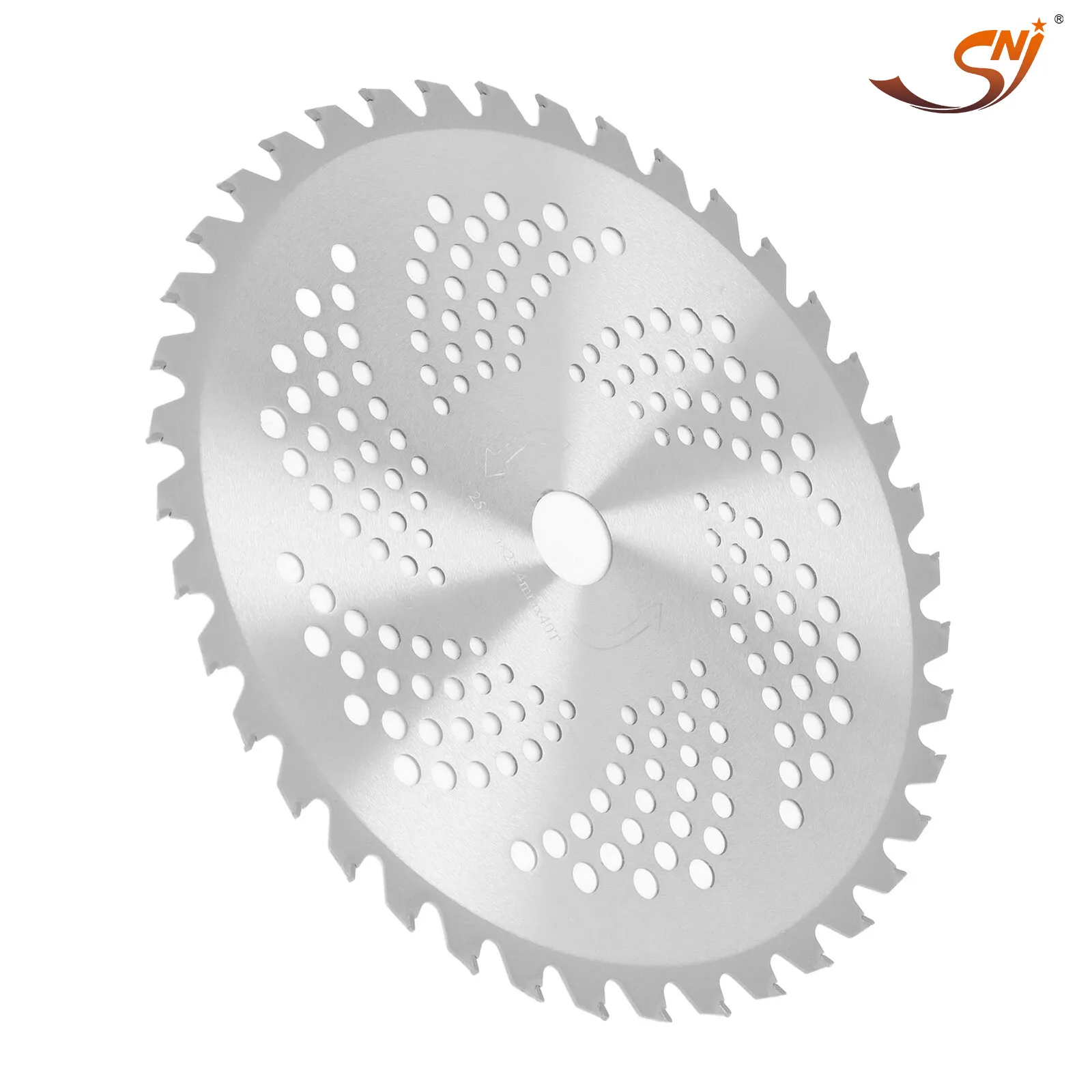
TCT saw blade performance depends on more than blade diameter and tooth count. Tooth geometry determines how carbide tips engage with the workpiece, remove material and influence the finished edge. FTG, ATB and TCG profiles are designed for different cutting priorities. Selecting the right configuration requires an understanding of the material, cutting direction, required surface finish and machine conditions.
1. Start with the material and cutting operation
Wood, plywood, MDF, laminated panels and aluminum profiles place different demands on a TCT saw blade. Material structure, thickness and surface characteristics influence how the teeth should engage with the workpiece.
The cutting direction is equally important. Ripping solid wood along the grain requires a different cutting approach from crosscutting across the grain. Cutting aluminum profiles involves different requirements for chip removal, tooth strength and operating conditions.
Before choosing a tooth profile, define the application as specifically as possible.
| Application detail | Why it matters | Information to provide |
|---|---|---|
| Material | Influences tooth profile and carbide selection | Solid wood, plywood, MDF, aluminum or other material |
| Cutting direction | Changes how teeth engage with the workpiece | Ripping, crosscutting, trimming or profile cutting |
| Material thickness | Affects tooth engagement and cutting stability | Actual thickness or profile dimensions |
| Cut objective | Determines the balance between speed and finish | Fast production, clean edge or general-purpose cutting |
| Machine | Determines blade fit and operating conditions | Machine type, model, RPM and power |
2. Match the tooth profile to the cutting priority
FTG, ATB and TCG are common tooth geometries used in TCT circular saw blades. Their differences affect how the cutting edges remove material and distribute cutting forces. Each profile has typical applications, but the final choice should always reflect the complete blade design and operating conditions.
FTG: Flat Top Grind
FTG teeth have a flat top and a straight cutting edge. Their relatively simple geometry supports efficient material removal and is commonly used for ripping solid wood along the grain.
This profile is worth considering when cutting productivity and tooth durability are important priorities. However, FTG blades may leave a rougher edge when crosscutting wood fibers, making them less suitable for applications that require a particularly clean visible finish.
ATB: Alternate Top Bevel
ATB teeth have alternating left- and right-hand bevels. This arrangement helps slice through wood fibers and is commonly selected for crosscutting and applications where edge finish matters.
ATB configurations are also used for plywood and other wood-based panels. The appropriate bevel angle and tooth count depend on the panel structure, cutting direction and required finish. For coated or laminated surfaces, specialized tooth designs may be considered when reducing surface chipping is a priority.
TCG: Triple Chip Grind
TCG alternates chamfered trapezoidal teeth with flat-topped teeth. The two tooth shapes share the cutting work, helping distribute wear and maintain a stable cutting profile.
TCG is commonly used for non-ferrous metals such as aluminum and can also be considered for certain engineered panels and abrasive materials. The exact blade design and material recommendation should be confirmed with the manufacturer, particularly when cutting coated or composite boards.
3. Compare FTG, ATB and TCG before selecting a blade
The three profiles are not interchangeable. A suitable choice depends on the material, cutting direction and result required from the operation.
| Tooth profile | Main design feature | Common applications | Main consideration |
|---|---|---|---|
| FTG | Flat top cutting edge | Solid wood ripping | Efficient material removal |
| ATB | Alternating bevels | Wood crosscutting, plywood and selected panels | Cleaner cutting edges |
| TCG | Alternating chamfered and flat teeth | Aluminum and selected engineered materials | Controlled cutting and tooth durability |
For example, an FTG blade may be appropriate for longitudinal timber cutting, while an ATB configuration is generally more suitable for clean wood crosscuts. TCG is often considered for aluminum profiles and certain abrasive or composite materials.
These are starting points rather than universal rules. Tooth count, hook angle, carbide grade and machine setup also affect the final result. A manufacturer should evaluate these specifications together rather than recommend a blade based on tooth geometry alone.
4. Confirm tooth count and hook angle
Tooth geometry describes the shape of the cutting edge, but it does not fully define how a blade performs. Tooth count and hook angle also influence cutting behavior, chip removal and the finish produced.
Tooth count influences chip space, cutting smoothness and material removal. A blade with fewer teeth generally provides more space for chip evacuation and may suit faster ripping operations. A higher tooth count can produce a finer finish in suitable applications, but it also requires appropriate feed conditions and sufficient chip clearance.
Hook angle describes the forward or backward inclination of the tooth relative to the blade centerline. It affects how aggressively the tooth engages with the material.
- A higher positive hook angle generally creates a more aggressive cutting action and can increase feed efficiency in suitable applications.
- A lower or negative hook angle may be preferred for certain machines and applications requiring more controlled tooth engagement.
- The appropriate angle depends on material, machine type, cutting direction and the manufacturer’s blade design.
Do not select tooth count or hook angle independently of the intended cutting operation. The blade diameter, material thickness and available machine power should also be considered.
5. Define how cutting performance will be evaluated
A blade should be assessed under a defined operating setup rather than judged by tooth profile alone. Buyers and manufacturers can compare performance more accurately when the test material, machine settings and acceptance criteria are recorded.
| Evaluation area | What to check |
|---|---|
| Edge quality | Chipping, roughness and surface consistency |
| Cutting efficiency | Cutting time, feed stability and production output |
| Chip evacuation | Whether chips clear the cutting area effectively |
| Blade behavior | Abnormal vibration, noise or heat buildup |
| Service life | Tooth wear and carbide tip condition over repeated cuts |
| Dimensional accuracy | Cutting width, straightness and consistency |
For a fair comparison, keep the material, machine, feed method and cutting conditions consistent. A change in any of these factors can influence the result. Recording the operating setup also makes it easier to identify whether a performance issue comes from the blade specification, machine condition or cutting process.
6. Check blade and machine compatibility before ordering
Even the correct tooth profile cannot compensate for an incompatible blade specification. Before placing an order, confirm the blade dimensions, mounting arrangement and machine operating limits.
- Outside diameter and required cutting depth
- Bore or arbor diameter and mounting arrangement
- Blade kerf and steel plate thickness
- Tooth count and tooth geometry
- Hook angle and rotation direction
- Machine type, spindle speed and available power
- Material thickness and expected production volume
The blade’s marked maximum operating speed must not be lower than the machine’s operating speed. Buyers should also confirm that the blade is designed for the intended machine and cutting application. Installation, guarding and operation should follow the blade and machine manufacturers’ instructions.
7. Use a complete RFQ checklist
For a more accurate quotation, provide the manufacturer with the following information. Photos of the workpiece, existing blade and machine label can also help clarify the application.
- Material type, thickness and material condition.
- Cutting operation: ripping, crosscutting, trimming or aluminum profile cutting.
- Preferred tooth geometry, if already specified.
- Blade diameter, bore, kerf and plate thickness.
- Required tooth count and hook angle, if known.
- Machine type, model, RPM and power.
- Required cutting finish and production priority.
- Order quantity, packaging requirements and destination market.
Find the Right TCT Saw Blade for Your Application
Selecting a TCT saw blade requires more than comparing diameter and tooth count. Tooth geometry, carbide quality, blade dimensions and machine compatibility all influence cutting performance. Defining the material and cutting requirements first helps buyers identify a suitable blade configuration and make supplier comparisons more meaningful.
Sinodream supplies TCT saw blades and other cutting tools for different material-processing applications. Whether you are sourcing blades for woodworking or aluminum cutting, sharing your material, machine and production requirements is a practical starting point for discussing the right specification.
Explore our TCT saw blade range, review our cutting tools, or contact Sinodream to discuss your sourcing requirements.
