

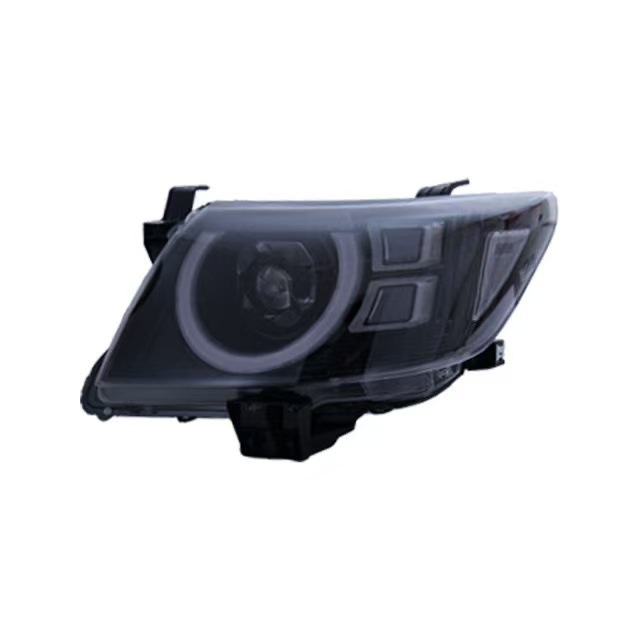
A replacement headlight assembly is both a vehicle-fit component and a regulated lighting device. A sourcing specification should therefore cover physical fitment, optical function, electrical architecture, road-market requirements and inspection criteria. Model name and model year alone are rarely enough for a reliable match.
1. Build an exact vehicle identity
Vehicle names may be reused across markets, while facelift dates, trim levels and wiring configurations can differ. Start the RFQ with a structured fitment record rather than a short model description.
- Make, model, generation and production year or month
- Body style, trim level and destination market
- VIN or chassis code where appropriate
- Left or right lamp when ordering a single side
- Clear photos of the original lamp, rear housing, connector and mounting tabs
- Original equipment part number and lamp markings, when available
Do not assume that two lamps with a similar front shape share the same rear housing or connector. Mounting points, leveling motors, control modules and sealing interfaces must also match.
2. Separate steering position from traffic direction
For asymmetric dipped beams, the beam pattern is related to the side of the road on which the vehicle is operated. State whether the product is for left-hand traffic or right-hand traffic, instead of relying only on “LHD” or “RHD.” Also identify whether the requested part is the vehicle’s left or right lamp.
| Specification field | Details to confirm | Common sourcing risk |
|---|---|---|
| Vehicle fitment | Generation, facelift, trim, body and market | Correct-looking lens with incompatible tabs or housing |
| Road direction | Left-hand or right-hand traffic | Incorrect dipped-beam pattern |
| Light source | Halogen, HID or LED; replaceable or integrated | Wrong driver, bulb base or thermal design |
| Functions | Low beam, high beam, DRL, position lamp and turn signal | Missing or differently controlled function |
| Controls | Manual/electric leveling, AFS and control modules | Warning messages or non-operating adjustment |
| Connector | Plug shape, pin count and function mapping | Physical fit without electrical compatibility |
3. Define every lighting and electronic function
“LED headlight” can describe several architectures: an LED daytime running light added to a halogen projector, a full LED optical module, or an assembly with integrated control electronics. List each required function individually and state whether bulbs, drivers, ballasts, leveling motors or external modules are included.
Where sequential turn signals, welcome animations or other styling functions are requested, document how they are triggered and whether an adapter harness or additional controller is needed. Confirm the expected behavior with the vehicle ignition, parking lights and turn-signal circuit before approving a sample.
4. Treat conformity as market-specific
The required evidence depends on the destination and product configuration. For markets applying UNECE rules, UN Regulation No. 149 addresses approval provisions for road-illumination devices, while UN Regulation No. 48 covers installation of lighting and light-signalling devices. Applicable series, markings and national acceptance should be checked for the vehicle and market.
For the United States, replacement lighting equipment is subject to Federal Motor Vehicle Safety Standard No. 108. NHTSA explains that replacement headlamps must conform to the applicable requirements and that a “DOT” mark represents the manufacturer’s certification rather than government pre-approval. See the NHTSA replacement-headlamp interpretation.
Ask for documents and markings that correspond to the exact quoted configuration. A report for a different light source, lens, optic or electronics package should not be assumed to cover the requested assembly.
5. Inspect a fitment sample before a larger order
A sample review should check more than whether the lamp powers on. Use the target vehicle and record the result consistently.
| Inspection area | What to verify |
|---|---|
| Physical fit | Mounting points, panel gaps, rear clearance and access to service parts |
| Electrical fit | Connector engagement, pin functions, warnings and all operating modes |
| Adjustment | Aiming range, adjuster operation and leveling function where fitted |
| Optical result | Beam pattern, cutoff orientation, aim and function transitions |
| Housing quality | Lens appearance, sealing surfaces, vents, tabs and fasteners |
| Identification | Part label, side, batch traceability and required markings |
6. Add packaging and logistics requirements
Headlight assemblies are vulnerable to lens abrasion, tab damage and movement inside the carton. Specify protective film or non-abrasive lens protection, shaped internal support, separate protection for connectors and modules, and a drop-resistant carton design appropriate to the distribution route. Confirm outer labels, left/right identification, barcode needs and spare-part handling requirements before production.
7. Send a complete RFQ package
- Vehicle identity, destination market and road-traffic direction.
- Left lamp, right lamp or complete pair.
- Original lamp photos, connector photos and reference number.
- Required low beam, high beam, DRL, position and turn-signal functions.
- Light-source type and included bulbs, drivers, ballasts or modules.
- Leveling, AFS or other vehicle-control requirements.
- Required conformity evidence, markings and destination regulations.
- Packaging, labeling and sample-inspection expectations.
8. Questions to resolve before approval
Does the assembly include all electronics?
Never infer this from the product photo. Confirm each included component in the quotation and sample packing list.
Is the beam pattern correct for the market?
Request the relevant configuration and verify the sample on suitable aiming equipment. Similar housings can be produced with different optical patterns.
Can the original vehicle functions be retained?
Confirm connector mapping, control logic and module compatibility for the exact trim. A physical fit does not guarantee full electronic compatibility.
Prepare your headlight sourcing request
Explore our headlight assemblies, review a Toyota Hilux Vigo assembly example, or send the fitment details and photos for review.
