

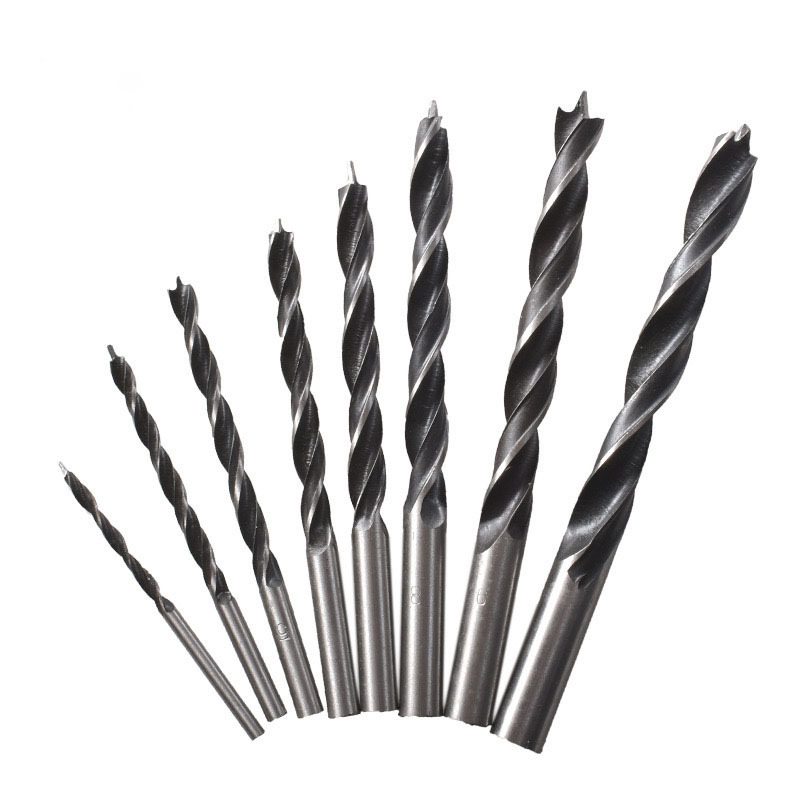
Selecting a brad point drill bit for woodworking involves more than choosing a hole diameter. The wood material, required hole depth, cutting-edge design, shank configuration and drilling equipment all influence the final specification. For furniture makers, cabinet manufacturers and woodworking tool distributors, defining these details before ordering helps reduce fitment problems and improves consistency across production tasks.
1. Start with the wood and drilling application
Different woodworking applications require different hole dimensions and drilling conditions. Furniture assembly, cabinet production, dowel installation and general workshop drilling may involve different hole diameters, depths and positioning requirements.
Before selecting a drill bit, identify the workpiece and the purpose of the hole. Solid wood, plywood, MDF and particleboard can differ in density, structure and surface characteristics. The appropriate cutting setup should be evaluated against the actual material rather than assuming one specification suits every woodworking task.
Provide the most specific application information available. For example, a 6 mm hole for furniture dowel installation is a more useful specification than simply requesting a small wood drill bit.
| Application Detail | Why It Matters | Information to Provide |
|---|---|---|
| Wood material | Influences cutting conditions and tool selection | Solid wood, plywood, MDF, particleboard or other material |
| Hole diameter | Determines the required drill bit size | Exact diameter in millimeters or inches |
| Drilling depth | Helps determine the required flute and working length | Blind hole or through-hole; required depth |
| Drilling equipment | Determines shank and machine compatibility | Drill type, chuck capacity and operating setup |
| Production requirements | Helps define the appropriate tool specification | Occasional workshop use or repeated production drilling |
2. Understand the brad point tip design
The brad point is a key feature of this type of woodworking drill bit. Its central point helps position the bit at the intended drilling location, while the two outer cutting spurs help define the hole perimeter.
This design is useful for woodworking applications where accurate hole positioning and a clearly defined entry point are important. It is commonly considered for furniture components, dowel holes and cabinetry work.
Brad Point with Two Cutting Spurs
The featured product uses a brad point with two cutting spurs. When choosing this configuration, buyers should consider the required hole diameter, workpiece material and drilling depth.
Other Tip Configurations
A crown head is also listed as an available alternative for this product series. Buyers considering a different tip design should confirm its geometry and intended application with the supplier rather than assuming that different head configurations provide identical results.
3. Compare flute and cutting-edge configurations
The flute design and cutting-edge condition influence how a drill bit interacts with the workpiece and handles wood chips during drilling. They should be considered together with the material and required hole dimensions.
Double Flutes
The featured brad point drill bit uses a double-flute configuration. This is the standard configuration listed for the product and is suitable for buyers looking for a conventional woodworking drill bit design.
Alternative Flute Designs
Twin land flutes and fast spiral flutes are also listed as available options. The appropriate choice depends on the intended application and the supplier’s available specifications.
Edge-Ground Cutting Edges
An edge-ground process is used for the featured product. Rolled and fully ground processes are also available. These are different manufacturing options, so buyers should specify the required process when requesting a quotation.
| Configuration | Available Option | What to Confirm |
|---|---|---|
| Flute design | Double flutes | Standard configuration and required dimensions |
| Alternative flute | Twin land flutes | Availability and application suitability |
| Alternative flute | Fast spiral flutes | Required geometry and drilling conditions |
| Cutting-edge process | Edge-ground, rolled or fully ground | Required process and specification |
4. Select the drill bit material and surface finish
Material selection is another important part of woodworking drill bit specification. The featured product uses high-carbon steel with heat treatment, while high-speed steel is listed as an available material option.
High-Carbon Steel
High-carbon steel is the specified material for this product. The drill bit body is heat-treated, and buyers should confirm the required material specification when comparing products from different suppliers.
High-Speed Steel Option
High-speed steel is available as an alternative. If a project requires this material, specify it clearly in the inquiry and confirm the final product configuration before ordering.
Black and Bright Finish
The product is listed with a black and bright surface finish. For bulk purchasing, buyers should confirm the required finish and visual consistency with the supplier, particularly when products will be sold under a retail or private-label brand.
5. Confirm the shank type and drilling equipment
The shank connects the drill bit to the machine, so compatibility should be checked before ordering. A drill bit with the correct diameter may still be unsuitable if its shank does not match the chuck or holder.
Round Shank
The featured product uses a round shank. This is the standard configuration listed on the product page.
Alternative Shank Options
Quick-change hex shanks and reduced shanks are also available. These options may be relevant when buyers have specific equipment or holder requirements.
- Confirm the drill machine and chuck type.
- Check the required shank diameter.
- Specify whether a round, quick-change hex or reduced shank is needed.
- Check the relationship between drill bit diameter and shank diameter.
- Confirm the overall length and available working length.
6. Match diameter, overall length and drilling depth
Diameter is only one part of a drill bit specification. Overall length and shank diameter also need to match the intended application and equipment.
The featured carbon steel brad point drill bit is listed in sizes from 3 mm to 32 mm. However, the overall length and shank diameter vary across the size range. Buyers should therefore select the complete size combination rather than assuming that all diameters share the same dimensions.
| Diameter | Overall Length | Shank Diameter |
|---|---|---|
| 3 mm | 60 mm | 3 mm |
| 4 mm | 75 mm | 4 mm |
| 5 mm | 85 mm | 5 mm |
| 6 mm | 91 mm | 6 mm |
| 8 mm | 112 mm | 8 mm |
| 10 mm | 120 mm | 10 mm |
| 12 mm | 140 mm | 10 mm |
| 16 mm | 160 mm | 13 mm |
| 20 mm | 200 mm | 13 mm |
| 25 mm | 235 mm | 13 mm |
| 32 mm | 280 mm | 13 mm |
The dimensions above are selected examples from the product size table. For intermediate sizes and the complete dimensional range, refer to the product specification or request the full size list from the supplier.
7. Use a complete RFQ checklist
A clear request for quotation helps suppliers identify the correct drill bit configuration and compare different manufacturing options. For woodworking drill bit orders, provide the following information:
- Wood material and intended application, such as furniture assembly, doweling or cabinetry.
- Required hole diameter and drilling depth.
- Preferred drill bit material: high-carbon steel or high-speed steel.
- Required tip design: brad point with two cutting spurs or another available configuration.
- Flute design and cutting-edge process.
- Shank type and shank diameter.
- Overall length and any other dimensional requirements.
- Surface finish, order quantity and packaging preference.
Photos of the existing drill bit, machine chuck or workpiece can also help clarify the requested specification. If the order includes multiple sizes, provide a size list with the required quantities for each diameter.
8. Check packaging and order consistency
Packaging is worth considering when sourcing drill bits for wholesale distribution or retail sales. The featured product lists several packaging options, allowing buyers to discuss the format that best suits their sales channel.
| Packaging Option | Purchasing Consideration |
|---|---|
| PVC pouch | Confirm labeling and product identification requirements |
| PVC skin card | Check display and retail presentation requirements |
| Paper sandwich | Confirm product protection and labeling details |
| PVC double blister | Check packaging dimensions and retail display needs |
| PVC tube | Confirm the suitable tube size for the selected drill bit |
For bulk orders, buyers should also confirm the quantity per carton, package dimensions, gross weight and shipping requirements. If several diameters are included in one order, clear size labeling helps with inventory management and product identification.
Discuss a Drill Bit for Your Application
Review our cutting tools range, see the carbon steel brad point wood drill bit, or send your application details for a specification discussion.
